Introduction
Perspectives: A Course of Vision, Hope, and Passion
As the name implies, the Perspectives course is about vision. It’s the same vision that empowered Jesus to live His life with joy, hope, and single-hearted passion. This course explores that vision and will help you respond to Christ’s invitation to live for the same purpose and significance that He did.
There’s joy in this vision. Jesus told His first followers that the value of living fruitfully for His Father’s glory was “that My joy may be in you, and that your joy may be made full” (John 15:11).
What was the vision? Jesus summed it up in one of His final prayers to His Father: “I glorified You on earth, having accomplished the work which You have given Me to do” (John 17:4). Jesus’s life purpose was to bring about God’s glory on earth. Throughout His life, Jesus kept the vision of God’s greater glory before Him. He believed His Bible as it told the story and described the prophetic certainty that God would be delighted by worship from every people. The vision of God’s glory focused His life choices and filled His daily endeavors with immense significance. Passion for God’s glory energized and integrated His life. Life with purpose was so satisfying that He said, “My food is to do the will of Him who sent Me and to accomplish His work” (John 4:34). As He set His life toward the hope of finishing God’s work, His life became a daily feast of purpose. This course aims to help you live strategically toward that same hope.
“Missions” is a loaded word for most Christians. Many people are exposed to missions in the context of appeals for volunteers or funds. Missions has often been reduced to a limited question of whether you will be a missionary or not. Most Christians would admit that they don’t really know enough about missions to know what they would do, even if they wanted to be a missionary. Even less clear is how someone can live for God’s global purpose without being a missionary.
The point of this course is not to persuade you to become a missionary. Neither is it to train you in the skills you need to serve as a missionary. The point of exposing you to many of the practicalities and challenges is to persuade you of the feasibility of finishing, with God’s help, the evangelization of every people. For many, exploring these possibilities helps them recognize what part God is giving to them.
The primary idea of this course is that God will fulfill His global purpose. The certainty that He will see it fulfilled makes His invitation to join Him in His mission a matter of heart-blazing hope. We are not called to perform dull religious duties. He is inviting His followers to lead lives of huge significance.
God has a “world-sized” role for every Christian in His global purpose.
Whether people go to distant countries or stay at home is a secondary issue. The primary issue is what most people are hungry to discover: vision to live a life of purpose. Discovering that vision makes this course valuable, and perhaps crucial, for any Christian.
What’s in This Course?
The course is designed around four vantage points or “perspectives”—Biblical, Historical, Cultural, and Strategic. Each one highlights different aspects of God’s global purpose.
The Biblical and Historical sections reveal why our confidence is based on the historic fact of God’s relentless work from the dawn of history until this day. That’s why the essence of this course is the record of what God has been unfolding for thousands of years toward a certain, and perhaps soon-coming, culmination.
As we wind our way through history, we will meet the largest and longest-running movement ever in history—the World Christian Movement. This is a movement of Christ followers from every generation and from every place. We will find that virtually every innovative approach we can imagine has been attempted by those who have gone before us. We are in league with the most substantial movement of creative and self-sacrificing people the world has ever seen.
The Cultural and Strategic sections underscore that we are in the midst of a costly but very doable task, confirming the Biblical and Historical hope.
The Biblical Perspective
1. The Living God Is a Missionary God
God’s purpose is threefold: against evil—kingdom victory; for the nations—redemption and blessing; and toward God—global glory in worship. God’s purpose is revealed in His promise to Abraham’s family. We explore God’s purpose for the nations: to bring blessing amid every people.
2. The Story of His Glory
God has been steadily unfolding a plan throughout all nations and generations to reveal His character and beauty to draw to Himself the sincere worship of all the peoples. We learn about praying for God’s name to be glorified.
3. Your Kingdom Come
We explore God’s work to overcome evil powers to bring people to know and follow Jesus. The kingdom of God is defined in terms of relationship with King Jesus Himself instead of merely describing values and visions of His reign. We can pray for Christ’s life to overwhelm evil.
4. Mandate for the Nations
The interest that Jesus showed toward non-Jewish people demonstrated His mission and how His followers could fulfill it. Christ’s words of commissioning reveal that He will be with His followers in wisdom and power. We deal with the ideas of pluralism (all religions the same) and universalism (all persons saved).
5. Unleashing the Gospel
The first followers of Jesus obeyed Him in costly ways, beginning not in their hometown in Galilee but in Jerusalem, where they suffered in order to open a door of faith for all peoples. An important point of Acts is that non-Jewish people could (and would) follow God in Christ without taking on the burden of Jewish traditions.
The Historical Perspective
6. Expansion of the World Christian Movement
The story of God’s purpose continues relentlessly from Abraham’s day until the present moment. We follow that story with an overview of the largest and longest-running movement ever in history—the World Christian Movement. We review how that movement has come to almost every people. We examine how mission movements have begun in many places throughout the world.
7. Eras of Protestant Mission History
Over the last two hundred years, three “bursts” of activity have led to great advances in world evangelization. Because of this great growth, the global harvest force now consists of many non-Western missionaries. We could be in the final era of missions.
8. Pioneers of the World Christian Movement
In our day we continue what others began long ago. It is a day of finishing. As we step into God’s multigenerational story, we are helped by learning from the wisdom of ordinary men and women who did extraordinary things in earlier generations. Reading some of the writings of William Carey and other leaders helps us to understand the legacy that has been left to us.
9. The Task Remaining
Previous generations have bestowed upon us a work that is nearly complete. We have inherited an almost evangelized world. The concept of “unreached peoples” helps us to understand the remaining task. Recognizing the imbalance of mission resources can help the global movement focus strategic priorities. The goal in every people should be to enable a movement that will declare and display the gospel throughout their people.
The Cultural Perspective
10. How Shall They Hear?
Communicating the gospel with relevance at the worldview level helps avoid syncretism (a blending of cultural error with God’s truth) and enables powerful movements of the gospel. Sensitive missionaries will look for ways that God has preserved or prepared people to hear the gospel, often finding redemptive analogies for God’s truth.
11. Building Bridges of Love
The incarnation is mentioned as a model of missionary humility. We explore how cross-cultural missionaries can find appropriate roles to form relationships of trust and respect in order to be received and develop a sense of belonging. When outsiders are received in this way, they can communicate with credibility, even in an urbanized, globally interconnected world.
The Strategic Perspective
Lessons 12–15 are arranged in strategic reverse sequence. The outcome is portrayed first, followed in reverse order by the necessary stages to achieve that end. Lesson 12 describes the fruit of the gospel’s transforming power. Lesson 13 describes life-giving church movements that bear these fruits of social change and thriving evangelistic efforts. Lesson 14 addresses the difficulties and the hope of how such movements are launched amid unreached peoples. Lesson 15 concludes by considering the partnership and discipleship that are required to send, support, and sustain the needed mission force.
To review the sequence with the analogy of churches as living things:
- Lesson 12 describes the fruit.
- Lesson 13 describes the plant in its flourishing, multiplying maturity.
- Lesson 14 describes how workers can sow the seeds of that plant in new settings.
- Lesson 15 describes the kind of people who are needed to send and support mission workers.
12. Christian Community Development
We consider a survey of world need and explore ways of bringing substantial and sustainable changes in health, education, and relationships in the local community. Because these changes are brought and sustained by Christ-following communities, we can speak of Christian community development. We explore and correct the charge that missionaries destroy, instead of serve, cultures.
13. Organic Multiplication of Churches
We look beyond institutional features to understand churches as dynamic movements of Christ Himself being followed. Such a view of churches as organic, living things opens up the practicality of rapid multiplication. These movements multiply by connecting with entire families and larger social structures. They often flourish, bearing the fruit of social transformation.
14. Pioneer Church Planting
Planting churches among unreached peoples is difficult but possible. Bringing a breakthrough of the gospel within an unreached people requires that the gospel be “de-Westernized.” There is a difference between contextualizing the message, the messenger, and the movement. We learn to appreciate how pioneer church planters initiate different kinds of Christward movements.
15. World Christian Discipleship
We learn how people integrate their lives for Christ’s global purpose as “World Christians.” We discuss the basic practices of World Christians: going, sending, welcoming, and mobilizing. We explore the four essential disciplines of World Christian discipleship: community, giving, praying, and learning. Many World Christians find ways to pursue business as they work in mission. Others welcome international visitors. We learn some lessons from many who have worked with local churches and in partnership with Christians in different parts of the world. We introduce some ways to be fruitful in short-term mission efforts.
Improvements over Earlier Versions
This is the fifth edition of the curriculum called Perspectives on the World Christian Movement. The first edition of the curriculum appeared in 1982. A second edition was released ten years later, in 1992. The third edition, which appeared in 1999, was a significant overhaul of the course. The fourth edition was another major change, published in 2009. Several translations were published.
Changes in the Fifth Edition
The fifth edition team aimed to clarify and deepen the course without making it more difficult to understand. The fifth edition will be familiar to the hundreds of thousands of people who have worked through the previous editions of the Perspectives course, many of them in countries other than the United States and in languages other than English. The fifth edition retains the same number of lessons with lesson titles and themes that are almost identical. Many basic themes and core ideas have not changed in the fifth edition, but watch for surprises. Many articles that have been part of the curriculum for years have been greatly revised. Many items have been edited to make them accessible and easily translated.
In the Biblical section you’ll find new material clarifying how God’s people co-work with the living God. We have strengthened several articles with small sidebars. We added more biblical substance throughout the course so that the paradigm shift of hope is a stronger, life-giving vision. God’s great story throughout the Bible is even more clear.
The Historical section may be the most changed. We now cover the important story of how the gospel came to and then was sent from Africa. We added a similar treatment about the continent of Latin America. We included some voices from the Majority World. Several items written by women celebrate the reality of women in mission. The rumor that missionaries destroy culture is more clearly refuted. The course has always attempted to present the challenges of fulfilling world evangelization. To assess the hope and cost of fulfilling the remaining task, we reviewed and updated most of the numbers.
The Cultural section contains new material about the gospel being presented effectively in societies that are oriented to shame and honor.
Several new articles were added to the Strategic section. We invited a few Majority World leaders to recount their stories about advancing the gospel and doing community development. Without adding overall length, we updated some of the case studies with recent developments.
1 The Living God Is a Missionary God

Studying this lesson will help you:
- Explain how the covenant with Abraham discloses God’s purpose for every people.
- Explain how God’s promises are an important part of our mandate for mission.
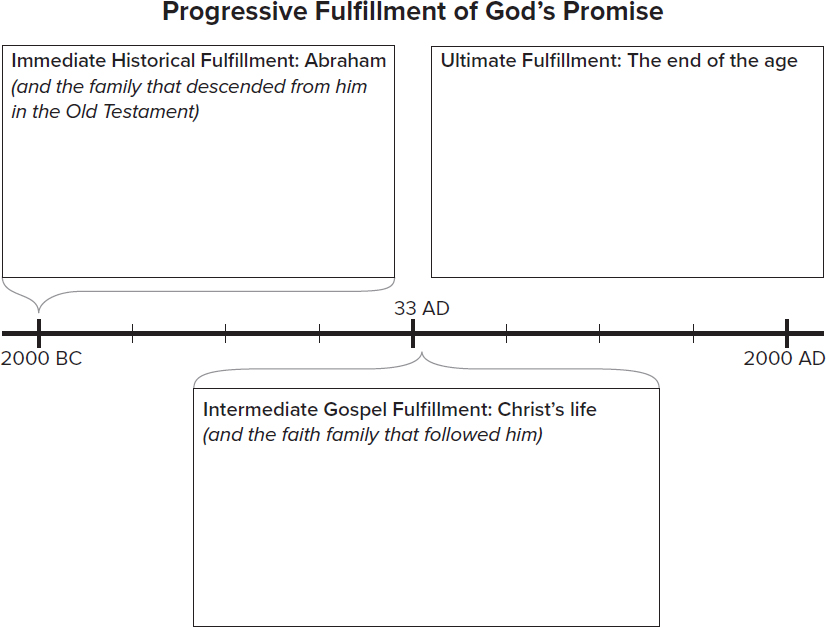
- Describe how God has fulfilled or will fulfill His promise to Abraham progressively through history: first, in the lives of Abraham and his descendants; next, in Christ and those who have followed Him; and finally, at the coming of Christ at the close of the age.
- Explain why the hope and the responsibility of the covenant with Abraham have been inherited by all those who have joined themselves with Christ by faith.
- Explain how the promised blessing of the nations is fulfilled primarily by the invitation to be part of God’s family in Christ.
- Explain how the promised blessing can also mean God’s people will be used to bring measures of tangible goodness and societal transformation among the nations.
- Describe God’s mission purpose as it unfolds in three directions: toward God, on behalf of all nations, and against evil powers.
- Describe how the most compelling mandate for mission comes from the entire story of the Bible.
The God of the Bible is a God of global purpose. He has already put in our hearts the longing to be a friend to a great God, to somehow become a coworker with Him, living in the dignity of a purpose larger than ourselves. We really want to serve God in the greatest way we know how. What prevents us? Although we know better than to treat God as if He were a personal problem-solver, it’s still common to regard Him from our point of view, as if He were on call to help us whenever we face difficult circumstances.
Our problem may be a matter of shriveled vision. We cannot devote ourselves to that which we cannot envision. Our vision is limited by the horizon of our own concerns and culture. But there is a better destiny—a larger purpose that God generously gives to His people. We can recognize God’s global purpose by lifting our eyes to see what He has been doing throughout history.
In this lesson we will begin a journey to discover what God has revealed about His purpose through the story of the entire Bible. We won’t have to guess, because God has made His intentions clear by making promises, and then repeatedly fulfilling those promises in surprising ways. By following God’s promises, and the partial fulfillments of them, we will come to see an unfolding timeline of the Bible’s story. By walking with God through the story of the Scriptures, we can see clearly His purpose for the rest of history.
The later it gets in history, the more trustworthy God can become in our sight, because all that He promised is taking place. Because He is a God of global purpose and because there is a mission that He has set Himself to fulfill, we can say that our God is a missionary God. The later it gets in history, the better God looks, because it’s all coming about as He promised. Because He is a God of grand purpose and because there is a mission He has set Himself to fulfill, our God is a missionary God.
Purpose
We were made to live for purpose. God Himself pursues a great, global purpose for all peoples. The way to live with significance is to devote yourself to co-working with God to fulfill His global purpose.
I. God’s Promise Reveals His Purpose
God could have revealed His purpose in the form of direct commands about what He wanted people to do. Instead, God chose to reveal His purpose in the form of a promise, a promise that was both personal and immensely global: to bring blessing upon all the families of the earth.
A. God’s Promise. A mandate is better than a mere command. God initially gave His mandate in the form of a promise instead of as a direct imperative command. This promise gives emphasis to what God would do far more than what Abraham and his family were expected to attempt. Instead of ordering Abraham to do a job with step-by-step directives, God emphasized the outcome that He wanted to see among all earth’s peoples. Consider how many millions of people have been involved in the fulfillment of this promise. What better way could God have used to convey His purpose to the entire faith family that would eventually co-work with Him for thousands of years?
B. The Progressive Fulfillment of God’s Promise. God reveals His intentions more clearly at each stage of fulfilling His promise. Each successive fulfillment is a greater fulfillment. John Stott describes a triple fulfillment. First, it was partially fulfilled in Abraham’s day and throughout the time of the Old Testament. Second, it was fully portrayed in the life of Jesus and the people who follow Him. Finally, the promise will be perfectly fulfilled at the end of the age. It is even now being fulfilled as Christ builds His people from every people.
C. God’s Promise Reveals a Missionary God. Through His promise and its fulfillments, we can see the living God as the God of history, the God of covenant and the God of mission.
Describe some of the details of the triple fulfillment of God’s promise to bless the nations.
II. Blessing as Transformation
God’s promise to Abraham reveals His intent for Abraham’s family to become God’s blessing to all the peoples of earth. But what does it mean to “be a blessing”? What does blessing look like when it happens? Sarita Gallagher Edwards and Steven C. Hawthorne follow the story of blessing in Genesis. The logic of their article is simple: Whatever God meant by saying “be a blessing” in the promise of Genesis 12 is clarified in the rest of Genesis.
A. Blessing as Both Spoken Endowment and Tangible Fulfillment
1. Spoken Endowment. Blessing is not a common idea in many Western societies. To speak or impart a blessing is to endow the person or thing that is blessed with a potency of life to flourish in an intended fullness. Speaking blessing was considered to be a transaction of life-giving power and not a mere utterance of words.
2. Tangible Fulfillment. In the Genesis account we see many instances in which the tangible fulfillment of blessing is evident. When this takes place, the person is considered to be blessed. We see three related categories of blessing:
- Material Wealth and Physical Abundance. God brought great wealth, by ancient Near East standards, to Abraham and his descendants.
- God’s Presence. God’s presence was recognized by those observing Abraham and his family.
- Peace with Neighboring Nations. The examples in the Genesis account suggest that where God brings blessing, there is a beginning of peace between feuding brothers or nations.
B. To Become God’s Blessing. It is one thing to see the incredible range of goodness that blessing entails. It’s quite another to see how a person or a people might become a blessing to others. Although Abraham and his descendants were less than a blessing at times, the Genesis story tells of several instances when God brought blessing on other nations and families through them.
1. Abraham, Isaac, and Jacob. God helped Abraham rescue his neighbors in Sodom and Gomorrah. Abraham interceded for the entire city of Sodom at a later time. Abraham prayed for God to restore the ability to bear children to Abimelech’s household. Isaac dug wells that provided enough for him and the surrounding nations. Jacob’s labor in Laban’s house was obviously the work of God.
2. Joseph. The story of Joseph is the climactic conclusion of Genesis. His story could well offer a prophetic portrait of God’s purpose. God gave Joseph the ability to interpret a specific dream and then helped him store up enough grain to help many survive a famine that “spread over all the face of the earth” (Gen 41:56). “The people of all the earth came to buy grain from Joseph” (Gen 41:57). As the famine increased, Joseph not only helped the people of Egypt survive, but he set them up with sufficient supplies to restore normal agricultural cycles. The people declared, “You have saved our lives!” (Gen 47:25). Joseph recognized that God was at work, “to preserve many people alive” (Gen 50:20).
C. The Way of Blessing: God’s Righteousness and Justice. Abraham was told to train his household to live and pursue true justice, based on God’s ways of righteousness.
D. Fulfillment in Later Descendants. The promise that he and his family would be a blessing to the nations was repeated to Abraham three times, then directly to Isaac, and then a fifth time to Jacob. As the promise was repeated, the language shifted so that it became obvious that much of the promise’s fulfillment would take place beyond the lifetimes of Abraham, Isaac, and Jacob, but instead in their descendants.
E. Fulfillment in Christ. In Galatians, Paul makes it clear that the promise of the blessing of the nations, the “gospel” announced early, was fulfilled in one preeminent descendant of Abraham: Jesus Christ. But Paul also says that all who trust in Christ become joined with Christ and thus become sons and daughters of Abraham’s family. This means that believers in Christ should consider themselves to be descendants of Abraham and heirs of God’s promise to bless them so that they will become a blessing to the nations.
The LORD had said to Abram, “Go from your country, your people, and your father’s household to the land I will show you.
I will make you into a great nation, and I will bless you; I will make your name great, and you will be a blessing.
I will bless those who bless you, and whoever curses you I will curse; and all peoples on earth will be blessed through you.” (Gen 12:1–3 NIV)
Read Genesis 12:1–3 carefully. Draw a circle around the different expressions of purpose or outcome beyond Abraham’s life. Underline the command(s). Double underline the different parts which are explicitly a promise to Abraham.
F. God’s Promise Becomes Our Mandate. If we are mandated to be His agents of blessing among all the peoples of earth, just what does it mean for the nations to be blessed? And how are we to pursue it?
1. Relational Blessing. The blessing of the nations means much more than evangelism, but it certainly can mean no less than the evangelization of every people. As the invitation to belong to God’s family by trusting in Christ is extended to every people, we can expect the children of Abraham to multiply in every people. As in Genesis, the presence of God upon those who follow Him is the beginning of all the more tangible aspects of blessing that God desires to bring. This means that evangelization has a special priority: It leads to every other kind of goodness that God desires to bring about among the nations.
2. Material and Social Blessing. “We should expect God to bring forth every kind of blessing, such as economies that flourish with justice and righteousness, agricultures and industries that abound with plenty for all, and peace throughout communities and between peoples and races. We can expect that God will enable His people to wage war against disease, to break the vicious cycles of poverty, to provide water in desert lands, and to be present with healing in the midst of catastrophe.”
3. Not the “Prosperity Gospel.” Take note that Gallagher Edwardsand Hawthorne distinguish the material abundance of blessing in Genesis from the “prosperity gospel” commonly taught in some circles. They say, “Advocates of the so-called ‘prosperity gospel’ may have more in common with [a magical] worldview which reduces blessing to a method of obtaining wealth from God.” Prosperity gospel teaching can come close to viewing God’s blessing as a reward for properly performed “faith” procedures. In its extreme forms, some Christians see blessing as God reallocating the financial wealth of the nations to come upon Christians, instead of seeing Christians as God’s agents of blessing upon the nations.
G. Blessing as Transformation. The idea and promise of blessing may give us biblical substance to the competing agendas that call for “transformation.” In the biblical idea of blessing, we find the marvelous power of God at work alongside the vigorous and strategic action of His people. But we are not expected to engineer solutions to every problem or create utopian perfection.
H. Joseph: The First One to Be Sent. The model of Joseph helps us understand how we can co-work with God to bring life-giving blessing. He is the first in Scripture who was said to have been sent by God (Gen 45:5).
III. What Is God’s Purpose?
As we will see in later lessons, God pursues a global purpose that will reconcile all things to Himself. Specifically, God is on mission to be loved, served and worshiped by people from all humanity. To accomplish that end, God acts with a determined purpose that will not only affect all peoples but also defeat evil spiritual powers. God’s purpose is a singular purpose with three distinct directions: toward God, for people, and against evil.
A. Toward God. God desires that worship will come to Him from every nation. Therefore, world evangelization is ultimately for God.
B. For People. God intends to bring redemptive blessing to every people. He will redeem a people from every people.
C. Against Evil. God will overcome evil powers in order to liberate people and, ultimately, to bring all things under His everlasting and complete governance. This kingdom reign is the substance of the blessing He brings to the nations.
God’s Purpose Summarized:
For His glory in global worship, and for the blessing of all nations,
God purposes to overcome evil by redeeming a people who will love and obey Him within every people.
IV. The Story of Blessing
Richard Bauckham surveys the astounding beauty and power of blessing as a theme running through the entire story of the Bible. He describes the mission-motivating dynamic of the ultimate expression of God’s blessing: the word concerning the life, death and resurrection of Jesus. Those who are blessed by this word become a blessing to others.
A. Creation and Curse. Bauckham follows the theme of blessing from creation and how God ultimately overwhelms the curse, which came as a consequence of sin, with the blessing of Christ.
B. The Gospel in Genesis 12. Bauckham quotes Galatians 3:8, “The Scripture, foreseeing that God would justify the Gentiles by faith, preached the gospel beforehand to Abraham, saying, ‘All the nations will be blessed in you.’” This text says that the gospel is foreshadowed and summed up in God’s promise of blessing.
C. God’s Full Purpose. As you read, notice how Bauckham mentions the same three directions of God’s purpose. The “gospel” announced so early to Abraham eventually overcame the curse and aftermath of evil, bringing a flourishing of life and salvation to people in order to bring praise to God.
V. God’s First Promise Displays His Final Victory
Long before Abraham, God had already promised to vanquish evil in order to redeem people. The first promise God made was concerning the serpent who had enticed Adam and Eve. It was a promise that a representative human would suffer and that satanic evil would be crushed. It was what some call the proto-evangel, or “first gospel.” Stanley A. Ellisen writes:
After Adam and Eve sinned in the garden, God first addressed the serpent who had tempted them (Genesis 3:14–15). In judgment, He also gave the proto-evangel (first gospel) to the man and woman, announcing His redemptive plan. To the serpent He said, “And I will put enmity between you and the woman, and between your seed and her seed; He shall bruise you on the head, and you shall bruise him on the heel.”
This message was obviously for Adam and Eve as well as for Satan. In it God prophesied that following a two-way enmity, two bruisings or crushings would take place. The woman’s seed would crush the head of the serpent, and the serpent would crush the heel of the woman’s seed. The two figures in this conflict are Christ, who was the seed “born of a woman” (Galatians 4:4), and Satan, “the serpent of old” (Revelation 12:9; 20:2). . . .
By analyzing these two crushings we get a thumbnail sketch of God’s twofold program on earth. The first statement, “He shall bruise you on the head,” was a declaration that Christ would destroy the devil with a fatal blow. Jesus spoke of His future work of binding Satan the “strong man” of this world system and casting him out (Matthew 12:29). His death on the cross was the blow that will eventually destroy Satan. (Ellisen, 3 Worlds in Conflict: God, Satan, Man; The High Drama of Bible Prophecy [Multnomah, 1998], 23)
The second crushing announced in Genesis 3:15 is the serpent’s heel-crushing of the woman’s seed. This demonic assault occurred on the cross where Satan was the driving force behind the crucifixion. As a “heel-crushing,” it suggests the temporary nature of Christ’s death, in contrast to the fatal crushing of the serpent. His death on the cross then became the foundation for God’s redemptive program, providing salvation for mankind.
In this proto-evangel, the Lord introduced His twofold program on earth—concerning His kingdom and man’s redemption. In its final fulfillment He will reclaim His usurped kingdom in all realms by destroying the devil and his followers, and in the process He will also provide eternal redemption for men. (Ellisen, 24)
VI. Co-working with God
When God says, “I am with you,” He means far better than assuring us of His presence. The phrase means that the living God is actively, and often miraculously, at work with His people. Almost every time that a person, or a people was sent to accomplish a part of God’s purpose, they would hear God encouraging them with the phrase, “I am with you.” God essentially is saying, that “You are with Me.”
A. God Working with Abraham’s Family. The statement that God was with Abraham’s family is easy to miss, but God’s active work is why there was blessing. Look up these verses: Abraham—Gen 21:22; Isaac—Gen 26:3, 24, 28; Jacob—Gen 28:15, 20; and Joseph—Gen 39:2–4, 21–23.
B. God Working with His People Advancing His Purpose. In any task that was difficult or dangerous, God announced that He would be with them, from military challenges to building the temple for the worship of the nations.
C. The Resurrected Jesus Is Now Working with His Followers. We are used to hearing about Jesus declaring that He would be with His co-working followers when He commissioned them in Matthew 28:18–20. Knowing the biblical backdrop for this word is encouraging.
VII. That the Nations Would Know and Worship Him
The structure of Psalm 67 is an “hourglass” form with repeating ideas being placed in a parallel position. It was a form of poetry common to the ancient world.
Psalm 67
1 God be gracious to us and bless us,
And cause His face to shine upon us—Selah.
2 That Your way may be known on the earth, Your salvation among all nations.
3 Let the peoples praise You, O God.
Let all the peoples praise You.
4 Let the nations be glad and sing for joy;
For You will judge the peoples with uprightness
And guide the nations on the earth. Selah.
5 Let the peoples praise You, O God;
Let all the peoples praise You.
6 The earth has yielded its produce;
God, our God, blesses us. 7 God blesses us,
that all the ends of the earth may fear Him.
- For People: Blessing. Verses 1–2 and verses 6–7 contain parallel themes of God blessing His people in order to make His salvation known to all the world.
- Toward God: Glory in Worship. Verses 3 and 5 are obviously similar, describing the “God-ward” aspect of God’s purpose in the worship of all the peoples.
- Against Evil: His Kingdom. In the central position, verse 4 is the “pivotal” idea that makes the rest come about. What will cause the nations to rejoice is God intervening to judge on behalf of all peoples. The idea of judgment will be explored more in lesson 3. Judgment in this text is not simple prosecution or punishment for wrongdoing. It speaks of God’s forceful dealings to confront and overcome evil. The verse states that God will not only deal redemptively against evil, but He will also bring about a relationship that guides the nations to live under His kingdom rule. This may be one of the most beautiful single-verse expressions of the kingdom of God in the entire Bible.
Katie Hoogerheide Frost describes how this psalm is derived directly from the blessing of Aaron (Num 6:22–26) upon God’s people. This shows that God’s people were aware of God’s purpose for blessing His people.
VIII. The Whole Bible as the Greater Mandate for Mission.
The biblical mandate for mission is not limited to a few Bible verses. We should never rely on a few apparent proof texts to justify a cause. We must look beyond isolated verses to see the mandate throughout the entire story of the Bible. Along the way we’ll note many references to God’s concern for the whole world. And of course, we’ll examine the relatively few passages in which God gives an explicit command for missionary activity. But we will see the huge mandate for world mission best as we walk through the entire story of the Bible.
 Conclusion of Certificate Readings for this lesson.
After studying this section you should be able to:
- Explain how the entire Bible gives us clarity about God’s mission and models for accomplishing it.
- Explain how the initial mission to care for creation relates to the mission of God as we see it in the Bible.
IX. The Bible Gives Us the Message, Model, and Power for Mission.
It is God’s mission. The Bible reveals not only what God gives us to do but what message He wants proclaimed. He gives us models to work fruitfully with Him in His mission.
X. Creation Care and Mission
A. The Earth Is the Lord’s. The Bible speaks of God’s ownership, enjoyment and glory in His creation. Humans are not the only creatures with a relationship with God. God made a covenant in Noah’s day with the earth and its creatures. Several scriptures speak of created things praising and glorifying God. Creation is intrinsically good, and we can speak of a sanctity of creation without suggesting its divinity. The purpose of creation is God’s glory.
B. Hope for the Redemption of Creation. Wright outlines the hope of a new heaven and a new earth. Instead of motivating us to dismiss creation care, this adds an important dimension of motivation and hope to our ecological ethics.
C. Creation Care and Biblical Mission. But in what sense does caring for the earth constitute Christian mission? Wright offers some possible points of connection between the two:
1. The Continuing Mission of Humanity. The initial mission of humanity was to rule over and care for creation. There is considerable debate as to how fully humankind can or should continue its initial mission and how that mission may or may not be identified with Christ’s clear mandate to disciple the nations. No one doubts that some measure of the initial mission of humanity is incumbent upon people everywhere. Although the mission Christ gave His church is related to the initial mission of humanity, the two missions are not the same. If we distinguish them from each other, we will see each more clearly and find ways to fulfill them together.
2. The Embodiment of God’s Compassion and Justice. The point here is that by caring for creation, we emulate God’s own compassion and express His justice. This can be seen as something related to, but different from, Christian mission.
3. Contending with False Ideologies. Involvement with creation care can help Christians contend with contrary ideologies and support the spread of the gospel.